
Study, work or travel in the UK. British
culture and life.

Buy tickets:
Ticketmaster
Ticketmaster





Football (soccer) in the UK
|
|
Study, work or travel in the UK. British
culture and life.
|
|
||
|
|
|
|
||
|
|
||||
|
Buy tickets:
Ticketmaster |
|
|
||
|
|
|
|
|
|
|
|
||||
|
Football (soccer) in the UK
|
||||
|
Sections:
|
Introduction |
 |
| UK football | ||
| European football | ||
| World Cup | ||
| Vocabulary | ||
| Further information | ||
| Links |
| Football club (FC) | Nickname | Location | Name of ground |
Website
|
| Arsenal | The Gunners | N London | Emirates Stadium | |
| Aston Villa | The Villans | Birmingham | Villa Park | |
| Cardiff City | The Bluebirds | Cardiff | Cardiff City Stadium | |
| Chelsea | The Blues | London | Stamford Bridge | |
| Crystal Palace | The Eagles/Glaziers | London | Selhurst Park | |
| Everton | The Toffees | Liverpool | Goodison Park | |
| Fulham | The Cottagers | SW London | Craven Cottage | |
| Hull City | The Tigers | Hull | KC Stadium | |
| Liverpool | The Reds | Liverpool | Anfield | |
| Manchester City (Man City) | The Blues/Citizens | Manchester | Maine Road | |
| Manchester United (Man Utd) | The Red Devils | Manchester | Old Trafford | |
| Newcastle United | The Magpies/The Toon | Newcastle upon Tyne |
St James' Park |
|
| Norwich City | The Canaries | Norwich | Carrow Road | |
| Southampton | The Saints | Southampton | St Mary's Stadium | |
| Stoke City | The Potters | Stoke | Britannia Stadium | |
| Sunderland | The Black Cats/Mackems | Sunderland | Stadium of Light | |
| Swansea City | The Swans/Jacks | Swansea | Liberty Stadium | |
| Tottenham Hotspur (Spurs) | Spurs/Lilywhites | N London | White Hart Lane | |
| West Bromwich Albion (West Brom) | Albion, The Baggies, The Throstles | Newcastle | The Hawthorns | |
| West Ham | The Hammers | E London | Boleyon Ground |
 Manchester United |
 Manchester City |
 Chelsea |
 Liverpool |
 Arsenal |
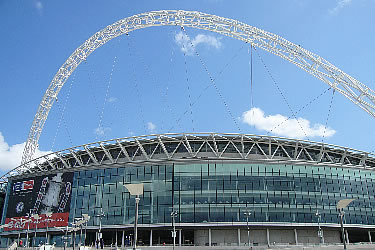 The FA Cup Final is played at Wembley Stadium (London) |
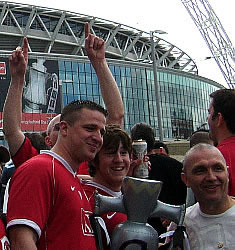 Fans enjoy pre-match celebrations |
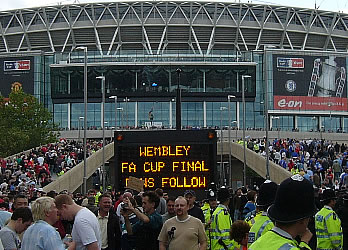 Entrance to the stadium |
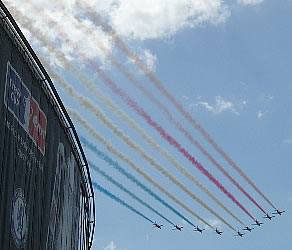 Flypast by the Red Arrows before the game starts |
|
Group
|
Team 1
|
Team 2
|
Team 3
|
Team 4
|
|
A
|
Poland
|
Greece
|
Russia
|
Czech Republic
|
|
B
|
Netherlands
|
Denmark
|
Germany
|
Portugal
|
|
C
|
Spain
|
Italy
|
Republic of Ireland
|
Croatia
|
|
D
|
Ukraine
|
Sweden
|
France
|
England
|
| Date | UK Time |
Group/Stage
|
Teams | Venue |
| Fri 8th June | 5:00pm |
A
|
Poland v Greece | Warsaw |
| Fri 8th June | 7:45pm |
A
|
Russia v Czech Republic | Wroclaw |
| Sat 9th June | 5:00pm |
B
|
Netherlands v Denmark | Kharkiv |
| Sat 9th June | 7:45pm |
B
|
Germany v Portugal | Lviv |
| Sun 10th June | 5:00pm |
C
|
Spain v Italy | Gdansk |
| Sun 10th June | 7:45pm |
C
|
Rep of Ireland v Croatia | Poznan |
| Mon 11th June | 5:00pm |
D
|
France v England | Donetsk |
| Mon 11th June | 7:45pm |
D
|
Ukraine v Sweden | Kiev |
| Tue 12th June | 5:00pm |
A
|
Greece v Czech Republic | Wroclaw |
| Tue 12th June | 7:45pm |
A
|
Poland v Russia | Warsaw |
| Wed 13th June | 5:00pm |
B
|
Denmark v Portugal | Lviv |
| Wed 13th June | 7:45pm |
B
|
Netherlands v Germany | Kharkiv |
| Thu 14th June | 5:00pm |
C
|
Italy v Croatia | Poznan |
| Thu 14th June | 7:45pm |
C
|
Spain v Rep of Ireland | Gdansk |
| Fri 15th June | 5:00pm |
D
|
Sweden v England | Kiev |
| Fri 15th June | 7:45pm |
D
|
Ukraine v France | Donetsk |
| Sat 16th June | 7:45pm |
A
|
Czech Republic v Poland | Wroclaw |
| Sat 16th June | 7:45pm |
A
|
Greece v Russia | Warsaw |
| Sun 17th June | 7:45pm |
B
|
Portugal v Netherlands | Kharkiv |
| Sun 17th June | 7:45pm |
B
|
Denmark v Germany | Lviv |
| Mon 18th June | 7:45pm |
C
|
Croatia v Spain | Gdansk |
| Mon 18th June | 7:45pm |
C
|
Italy v Rep of Ireland | Poznan |
| Tue 19th June | 7:45pm |
D
|
England v Ukraine | Donetsk |
| Tue 19th June | 7:45pm |
D
|
Sweden v France | Kiev |
| Thu 21st June | 7:45pm |
QF1
|
1st Group A v 2nd Group B | Warsaw |
| Fri 22nd June | 7:45pm |
QF2
|
1st Group B v 2nd Group A | Gdansk |
| Sat 23rd June | 7:45pm |
QF3
|
1st Group C v 2nd Group D | Donetsk |
| Sun 24th June | 7:45pm |
QF4
|
1st Group D v 2nd Group C | Kiev |
| Wed 27th June | 7:45pm |
SF1
|
Winner QF1 v Winner QF3 | Donetsk |
| Thu 28th June | 7:45pm |
SF2
|
Winner QF2 v Winner QF4 | Warsaw |
| Sun 1st July | 7:45pm |
Final
|
Final | Kiev |
| Stage | Date | UK Time | Venue | Team 1 | Team 2 | Station |
| Group A | 12 Jun | 9:00 PM | Sao Paulo | Brazil | Croatia | ITV |
| Group A | 13 Jun | 5:00 PM | Natal | Mexico | Cameroon | ITV |
| Group B | 13 Jun | 8:00 PM | Salvador | Spain | Netherlands | BBC |
| Group B | 13 Jun | 11:00 PM | Cuiaba | Chile | Australia | ITV |
| Group C | 14 Jun | 5:00 PM | Belo Horizonte | Colombia | Greece | BBC |
| Group C | 14 Jun | 2:00 AM | Recife | Côte d'Ivoire | Japan | ITV |
| Group D | 14 Jun | 8:00 PM | Fortaleza | Uruguay | Costa Rica | ITV |
| Group D | 14 Jun | 11:00 PM | Manaus | England | Italy | BBC |
| Group E | 15 Jun | 5:00 PM | Brasilia | Switzerland | Ecuador | ITV |
| Group E | 15 Jun | 8:00 PM | Porto Alegre | France | Honduras | BBC |
| Group F | 15 Jun | 11:00 PM | Rio De Janeiro | Argentina | Bosnia and Herzegovina | BBC |
| Group F | 16 Jun | 8:00 PM | Curitiba | Iran | Nigeria | BBC |
| Group G | 16 Jun | 5:00 PM | Salvador | Germany | Portugal | ITV |
| Group G | 16 Jun | 11:00 PM | Natal | Ghana | USA | BBC |
| Group H | 17 Jun | 5:00 PM | Belo Horizonte | Belgium | Algeria | ITV |
| Group H | 17 Jun | 11:00 PM | Cuiaba | Russia | Korea Republic | BBC |
| Group A | 17 Jun | 8:00 PM | Fortaleza | Brazil | Mexico | BBC |
| Group A | 18 Jun | 11:00 PM | Manaus | Cameroon | Croatia | ITV |
| Group B | 18 Jun | 8:00 PM | Rio De Janeiro | Spain | Chile | BBC |
| Group B | 18 Jun | 5:00 PM | Porto Alegre | Australia | Netherlands | ITV |
| Group C | 19 Jun | 5:00 PM | Brasilia | Colombia | Côte d'Ivoire | BBC |
| Group C | 19 Jun | 11:00 PM | Natal | Japan | Greece | BBC |
| Group D | 19 Jun | 8:00 PM | Sao Paulo | Uruguay | England | ITV |
| Group D | 20 Jun | 5:00 PM | Recife | Italy | Costa Rica | BBC |
| Group E | 20 Jun | 8:00 PM | Salvador | Switzerland | France | ITV |
| Group E | 20 Jun | 11:00 PM | Curitiba | Honduras | Ecuador | ITV |
| Group F | 21 Jun | 5:00 PM | Belo Horizonte | Argentina | Iran | ITV |
| Group F | 21 Jun | 11:00 PM | Cuiaba | Nigeria | Bosnia and Herzegovina | BBC |
| Group G | 21 Jun | 8:00 PM | Fortaleza | Germany | Ghana | BBC |
| Group G | 22 Jun | 11:00 PM | Manaus | USA | Portugal | BBC |
| Group H | 22 Jun | 5:00 PM | Rio De Janeiro | Belgium | Russia | BBC |
| Group H | 22 Jun | 8:00 PM | Porto Alegre | Korea Republic | Algeria | ITV |
| Group A | 23 Jun | 9:00 PM | Brasilia | Cameroon | Brazil | ITV |
| Group A | 23 Jun | 9:00 PM | Recife | Croatia | Mexico | ITV |
| Group B | 23 Jun | 5:00 PM | Curitiba | Australia | Spain | ITV |
| Group B | 23 Jun | 5:00 PM | Sao Paulo | Netherlands | Chile | ITV |
| Group C | 24 Jun | 9:00 PM | Cuiaba | Japan | Colombia | BBC |
| Group C | 24 Jun | 9:00 PM | Fortaleza | Greece | Côte d'Ivoire | BBC |
| Group D | 24 Jun | 5:00 PM | Natal | Italy | Uruguay | ITV |
| Group D | 24 Jun | 5:00 PM | Belo Horizonte | Costa Rica | England | ITV |
| Group E | 25 Jun | 9:00 PM | Manaus | Honduras | Switzerland | BBC |
| Group E | 25 Jun | 9:00 PM | Rio De Janeiro | Ecuador | France | BBC |
| Group F | 25 Jun | 5:00 PM | Porto Alegre | Nigeria | Argentina | ITV |
| Group F | 25 Jun | 5:00 PM | Salvador | Bosnia and Herzegovina | Iran | ITV |
| Group G | 26 Jun | 5:00 PM | Recife | USA | Germany | BBC |
| Group G | 26 Jun | 5:00 PM | Brasilia | Portugal | Ghana | BBC |
| Group H | 26 Jun | 9:00 PM | Sao Paulo | Korea Republic | Belgium | ITV |
| Group H | 26 Jun | 9:00 PM | Curitiba | Algeria | Russia | ITV |
| Second-round 1 | 28 Jun | 5:00 PM | Belo Horizonte | Winner Group A | Runner-up Group B | tba |
| Second-round 2 | 28 Jun | 9:00 PM | Rio De Janeiro | Winner Group C | Runner-up Group D | tba |
| Second-round 3 | 29 Jun | 5:00 PM | Fortaleza | Winner Group B | Runner-up Group A | tba |
| Second-round 4 | 29 Jun | 9:00 PM | Recife | Winner Group D | Runner-up Group C | tba |
| Second-round 5 | 30 Jun | 5:00 PM | Brasilia | Winner Group E | Runner-up Group F | tba |
| Second-round 6 | 30 Jun | 9:00 PM | Porto Alegre | Winner Group G | Runner-up Group H | tba |
| Second-round 7 | 01 Jul | 5:00 PM | Sao Paulo | Winner Group F | Runner-up Group E | tba |
| Second-round 8 | 01 Jul | 9:00 PM | Salvador | Winner Group H | Runner-up Group G | tba |
| Quarter-final 1 | 04 Jul | 9:00 PM | Fortaleza | Winner Second-round 1 | Winner Second-round 2 | tba |
| Quarter-final 2 | 04 Jul | 5:00 PM | Rio De Janeiro | Winner Second-round 5 | Winner Second-round 6 | tba |
| Quarter-final 3 | 05 Jul | 9:00 PM | Salvador | Winner Second-round 3 | Winner Second-round 4 | tba |
| Quarter-final 4 | 05 Jul | 5:00 PM | Brasilia | Winner Second-round 7 | Winner Second-round 8 | tba |
| Semi-final 1 | 08 Jul | 9:00 PM | Belo Horizonte | Winner Quarter-final 1 | Winner Quarter-final 2 | tba |
| Semi-final 2 | 09 Jul | 9:00 PM | Sao Paulo | Winner Quarter-final 3 | Winner Quarter-final 4 | tba |
| Play-off | 12 Jul | 9:00 PM | Brasilia | Loser Semi-final 1 | Loser Semi-final 2 | tba |
| Final | 13 Jul | 8:00 PM | Rio De Janeiro | Winner Semi-final 1 | Winner Semi-final 2 | tba |
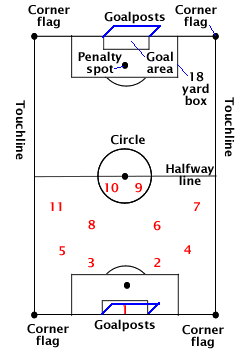 |
Positions
(note: numbers/positions vary) 1 : Goalkeeper ("goalie") Defenders: 2/3 : Centre back 4 : Right back/fullback 5 : Left back/fullback Midfielders: 6: Inside right or right wing half 7 : Right wing 8: Inside left or left wing half 11: Left wing Strikers: 9/10 : Centre forward |

|
|
|